
Somewhere in Japan, there is a tea bowl with a crack running through it. No one hid the crack. No one threw the bowl away. Someone filled it with gold. That, in one image, is wabi-sabi, the Japanese philosophy that finds beauty in imperfection, impermanence, and the quiet grace of things (and people) shaped by time. And if you've ever felt exhausted by the chase for a perfect life, a perfect body, a perfect feed, this 500-year-old wisdom might be exactly what your soul has been waiting for....

Somewhere in Japan, there is a tea bowl with a crack running through it.
No one hid the crack. No one threw the bowl away.
Someone filled it with gold.
That, in one image, is wabi-sabi, the Japanese philosophy that finds beauty in imperfection, impermanence, and the quiet grace of things (and people) shaped by time. And if you've ever felt exhausted by the chase for a perfect life, a perfect body, a perfect feed, this 500-year-old wisdom might be exactly what your soul has been waiting for.
At LiveWabiSabi, this philosophy isn't just something we admire. It's something we live, and something we see reflected in every real, imperfect, courageous story we publish.
Here's what wabi-sabi truly means, where it comes from, and ten life lessons you can begin living today.
Wabi-Sabi Meaning: More Than an Aesthetic
Wabi-sabi (侘寂) is a Japanese worldview centered on accepting transience and imperfection, often described as the appreciation of beauty that is "imperfect, impermanent, and incomplete."
The word joins two older ideas:
Wabi once described the loneliness of living apart from society. Over centuries, its meaning transformed into something luminous: the quiet richness of simplicity, finding beauty and contentment in having less, in the rustic, the understated, the natural.
Sabi speaks of the beauty that arrives only with time, the patina on old wood, the softness of a well-worn book, the character in a weathered face. Not decay to be feared, but depth to be honored.
Together, they describe a way of seeing ~ and a way of being. Nothing lasts. Nothing is finished. Nothing is perfect. And within those three truths lives an extraordinary permission: you don't have to be perfect either.
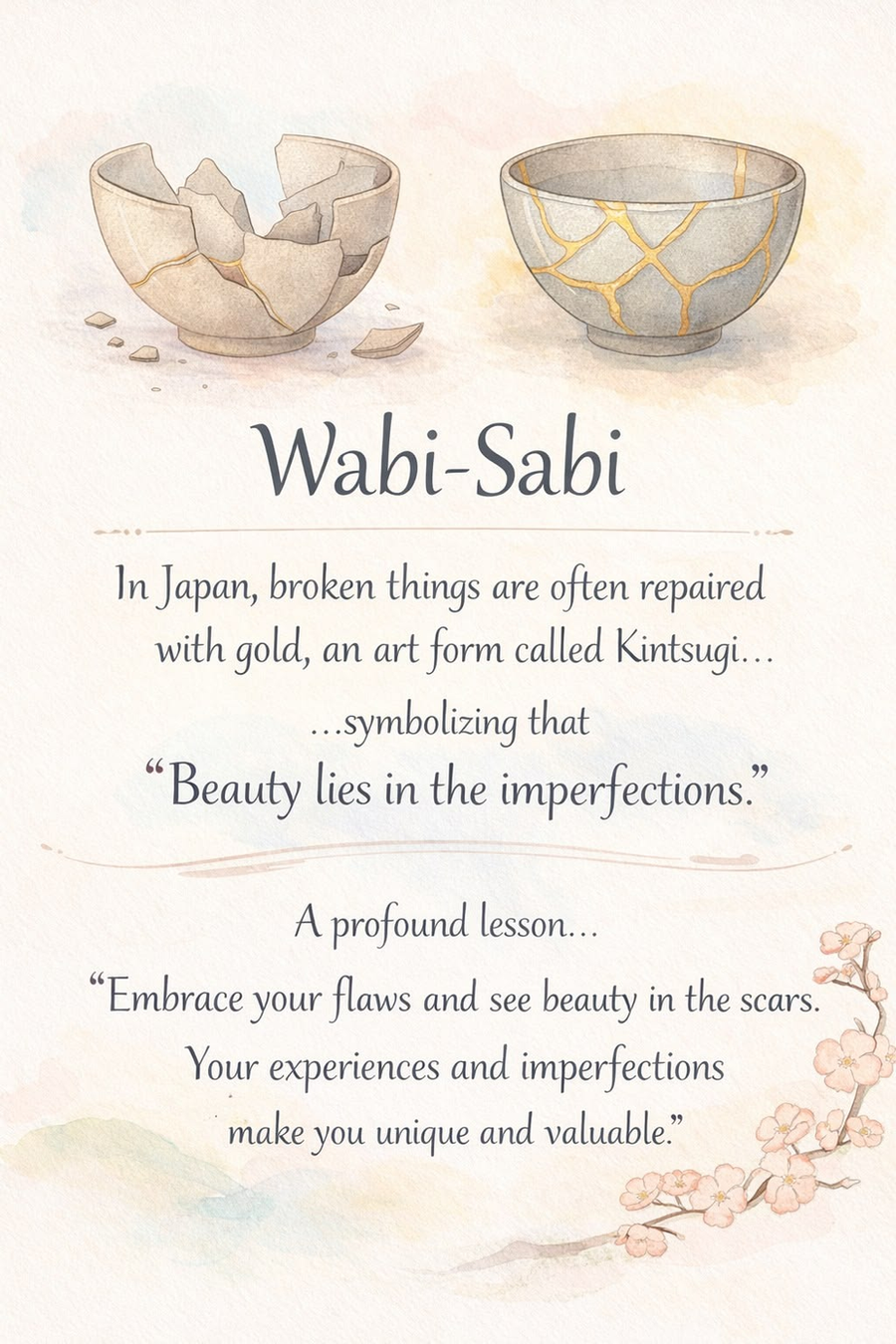
Image Credit: Pinterest
A Brief History: From Zen Monks to Your Morning Tea
Wabi-sabi has its roots in Zen Buddhism, which teaches that all things, ourselves included ~ are impermanent and imperfect, and that peace comes from embracing this rather than fighting it.
The philosophy took shape through the Japanese tea ceremony. In the 15th century, the Zen monk Murata Jukō quietly rebelled against the fashion of his era. While the ruling class showed off ornate Chinese porcelain and gold, he chose simple, rough, locally made clay bowls, teaching that the humble held more beauty than the extravagant. A century later, the great tea master Sen no Rikyū carried this spirit further, refining the simple, rustic tea ceremony that made wabi-sabi a cornerstone of Japanese culture.
And from that same lineage of thought comes kintsugi, the art of repairing broken pottery with gold, embracing the break as part of the object's story rather than something to disguise. The repaired bowl isn't ruined. It's more beautiful because it was broken.
Sound familiar? It should. It's the philosophy behind everything we do at LiveWabiSabi, because what kintsugi does for pottery, storytelling does for people.
Why the World Needs Wabi-Sabi Right Now
We live in an era of highlight reels. Filters. Comparison. Burnout dressed up as ambition.
Modern research echoes what the tea masters knew centuries ago: when people allow their imperfections and vulnerabilities to be visible, they're often seen as more relatable and trustworthy, not less, while presenting as flawless tends to create distance instead of connection.
The crack is not the problem. Hiding it is. Which brings us to the ten lessons.
10 Wabi-Sabi Life Lessons for a Beautifully Imperfect Life
1. Stop Chasing Perfect
Nothing in life is perfect, and it was never meant to be. Every day you wait for "perfect" is a day your real story goes untold. Start imperfect. Start anyway.
2. Accept Change
Seasons change. Chapters change. So do you. Fighting change breaks you; flowing with it rebuilds you. In wabi-sabi, impermanence isn't a tragedy, it's the very thing that makes each moment precious. Reinvention is how you find yourself again.
3. Slow Down
Your story doesn't need to rush. Not every chapter is meant to be sprinted through. When you slow down, you finally notice the small joys hiding inside ordinary days. Slow is not behind. Slow is present.
4. Less Is More
You don't need a louder life, you need a truer one. Fewer things. Fewer masks. Fewer borrowed dreams. This is wabi in its purest form: the spiritual abundance of simplicity. When you carry less, you become more.
5. Find Beauty in Imperfection
Like kintsugi, the art of mending broken pottery with gold, a crack, a flaw, or a rough edge can hold warmth, character, and meaning. Your cracks are where the gold goes. Your imperfections are your unique signature.
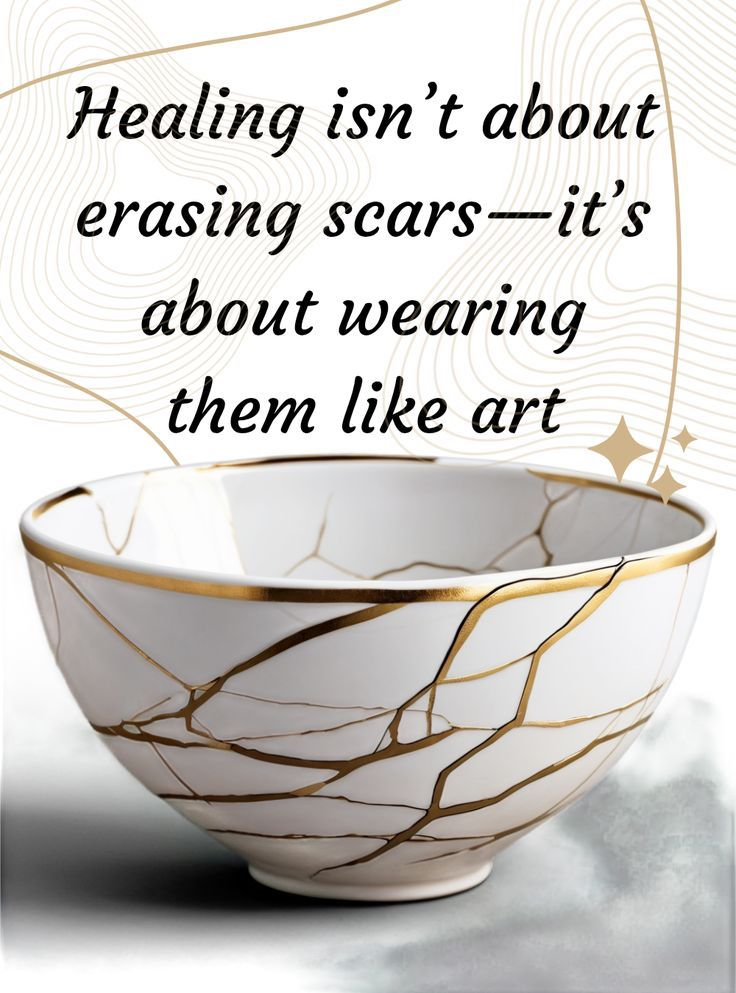
Image Credit: Pinterest
6. Be Yourself, Not Perfect
You were never meant to impress everyone. You were meant to reach someone. Your story, your scars, your realness, that's what helps another person believe in themselves again. Be unapologetically yourself.
7. Let Go of Control
Some chapters write themselves. You can't control everything, and holding on tighter only breaks you harder. Loosen your grip. Trust the unfolding. Letting go isn't giving up, it's making room for grace.
8. Appreciate Ordinary Moments
Morning tea. A quiet walk. Soft light through a window. The tea masters built an entire philosophy around a simple bowl of tea, because the extraordinary hides inside the ordinary. These aren't small moments. They're your life, happening.
9. Create Space in Life
Empty space is not wasted space. Too much noise, clutter, and pressure leave no room to breathe, or to hear your own story. Guard a little quiet for yourself. Stillness is where your next chapter begins.
10. Life Is Short ~ Live Gently
Be kind to the person you're becoming. You don't have to win every day; you only have to keep moving, with peace. Live gently. Love your cracks. Leave gold wherever you've been broken.
Living Wabi-Sabi: Where Philosophy Becomes Story
Here's what we believe at LiveWabiSabi: wabi-sabi was never meant to stay in museums and tea rooms. It's meant to be lived, in careers that took unexpected turns, in comebacks after loss, in women rebuilding themselves one imperfect day at a time.
That's why every story we publish carries the same golden thread:
Be unapologetically yourself ~ your imperfections are your unique signature.
If this philosophy speaks to you, here's where to go deeper:
🌿 Explore more posts in our Wabi-Sabi Philosophy collection
📖 Read real stories of beautiful imperfection in LiveWabiSabi Magazine
🎙 Listen to unfiltered conversations on the LiveWabiSabi podcast
✨ Ready to share your own journey? Your story might be exactly what someone else needs to survive their chapter. Reach out at livewabisabilife@gmail.com we'd love to hear it.

Image Credit: Pinterest
Frequently Asked Questions About Wabi-Sabi
What does wabi-sabi mean in simple terms? Wabi-sabi is the Japanese philosophy of finding beauty in imperfection, impermanence, and simplicity. In everyday terms: nothing lasts, nothing is finished, and nothing is perfect ~ and that's exactly what makes life beautiful.
Where does wabi-sabi come from? Wabi-sabi grew from Zen Buddhism and was shaped through the Japanese tea ceremony in the 15th and 16th centuries, when tea masters like Murata Jukō and Sen no Rikyū chose simple, rustic beauty over extravagance.
What is the difference between wabi-sabi and kintsugi? Wabi-sabi is the philosophy ~ the worldview that finds beauty in imperfection. Kintsugi is a practice born of that philosophy: repairing broken pottery with gold so the cracks become part of the object's story rather than something to hide.
How do I practice wabi-sabi in daily life? Start small: release one perfectionist standard, savor one ordinary moment fully, declutter one corner of your home or schedule, and speak to yourself the way you'd speak to someone you love. Wabi-sabi is less a technique and more a gentler way of seeing.
Is wabi-sabi just a design trend? No. While wabi-sabi influences interiors and design, it is first and foremost a centuries-old worldview ~ a holistic approach to accepting life as it is, rooted in Zen Buddhist thought.
Which of these ten lessons do you need most in your life right now? Your answer might be the exact permission someone else is waiting for. 🌿
Lead with awareness.
Create with intention.
Rest when needed.
Make today something you feel, not just something you finish.
Wishing you strength, resilience, and limitless growth.
Love & Light,
LiveWabiSabi


